Published
- 10 min read
Max Verstappen and the Refusal to Quit
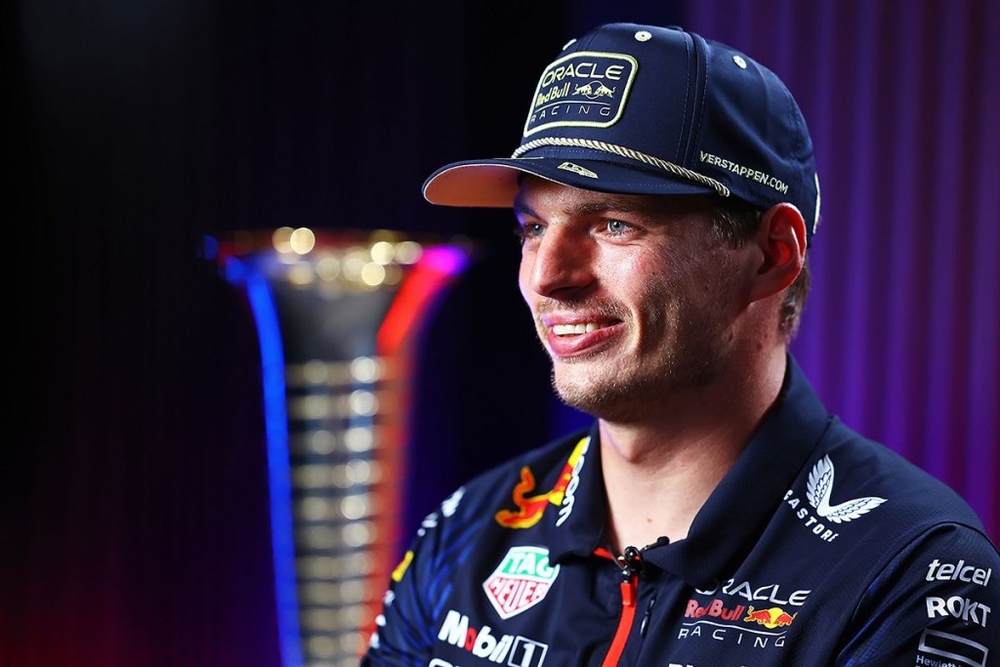
Max Verstappen and the Refusal to Quit
There is a cheap version of motivation, and then there is the real thing.
The cheap version is clean, polished, and easy to post online. It tells people to stay positive, trust the process, and wait for their moment.
The real thing is harder.
The real thing is looking at a season that should already be dead, a car that is not good enough, a points gap that should have ended the conversation, and still deciding that none of that is enough to make you back down.
That was Max Verstappen’s 2025 season.
This is not really a story about winning. In the end, he did not win the title. Lando Norris took the championship by two points. But that is exactly why the season matters. If Verstappen had won, people would have turned it into a fairy tale. Because he lost, the season reveals something deeper: the mentality itself.
What made 2025 unforgettable was not comfort, dominance, or smooth control.
It was refusal.
The 104-Point Gap
By late summer, the championship picture looked finished.
A 104-point gap in modern Formula 1 is supposed to end belief. That is the kind of number that makes fans move on, makes teams start speaking carefully, and makes rivals feel safe.
A gap like that gives people permission to become reasonable.
They start saying:
- maybe next year
- maybe if the car improves
- maybe just salvage what is left
- maybe the season is gone
Verstappen drove as if that number insulted him.
That is the part worth studying.
A lot of people only fight hard when the environment supports them. They can be confident when everything is aligned, when progress is visible, and when the path makes sense.
Verstappen becomes most dangerous when the situation becomes disrespectful.
He does not seem to need favorable conditions to stay committed. In some strange way, ugly circumstances seem to sharpen him.
That is not optimism.
That is hostility toward surrender.
The Mentality People Keep Trying to Sanitize
People like to describe elite competitors in polite language.
They say:
- confidence
- resilience
- champion mentality
- belief
Those words are not wrong. They are just incomplete.
Because sometimes what drives the great ones is something harsher.
A kind of internal fuck you.
Not random anger.
Not immaturity.
Not chaos.
Something colder.
It is the refusal to let conditions dictate effort.
It is the refusal to perform defeat before defeat is final.
It is the refusal to become obedient to a narrative just because everybody else has accepted it.
That is what makes Verstappen so compelling.
His appeal has never come from trying to be universally liked. He does not race like a man seeking approval. He races like a man who has already accepted conflict and no longer needs anyone’s permission to impose himself on the season.
That is why fans connect to him so strongly.
Because there is something brutally honest about a competitor who does not negotiate with difficulty.
He Did Not Need the Season to Be Fair
One of the clearest ways to identify people who do not truly understand competition is to watch how often they require fairness before they give everything.
They need:
- the ideal setup
- the clean runway
- the right support
- the visible path from effort to reward
Verstappen’s 2025 season was compelling because none of that was guaranteed.
The Red Bull was not the untouchable machine it had been in previous years. The campaign was unstable. The car was inconsistent. The title fight was not arranged for him to dominate.
And still, he kept coming.
That matters.
Because there is a huge difference between denial and defiance.
Denial says the problem is not real.
Defiance says the problem is real, and I am still coming anyway.
Verstappen did not pretend everything was perfect. He did not need to lie to himself. He could admit the problems and still attack.
That is a much harder mentality than simple confidence.
Confidence is easy when everything works.
What matters is how someone behaves when the machine is flawed, the timing is bad, and the standings are humiliating.
That is where character stops being decorative.
The Flying Dutchman Does Not Go Quietly
The nickname fits for more than one reason.
Yes, he is Dutch.
Yes, he is fast.
But there is also something almost mythic about the way Verstappen refuses to disappear from a title fight even after the story is supposed to move on without him.
In 2025, the narrative kept trying to leave him behind.
The season wanted to become a McLaren story.
The title wanted to become a Norris story.
Verstappen was supposed to remain relevant, but not central.
Instead, he forced himself back into the center of the fight.
That is rare.
A lot of people can survive losing. Fewer can survive being narratively removed. Fewer can tolerate irrelevance without shrinking internally.
Verstappen refused that completely.
He refused to become ceremonial.
He refused to become a background champion.
He refused to let the year proceed as though his role had already been decided.
By the time the title fight reached Abu Dhabi, the gap was down to 12 points.
That alone says everything.
The season that should have died was still alive.
And he did the only thing available to him. He took pole. He won the race. He made Norris earn the championship under real pressure.
Even in defeat, he did not leave quietly.
There is something honorable about making the impossible work harder to finish you.
Never Give Up Is Usually Said Too Softly
“Never give up” is one of the weakest phrases in sports language because it is usually said by people who mean one thing:
stay positive.
That is not enough.
Hope is passive.
Verstappen’s 2025 season was not passive. It was active resistance against closure.
He did not just feel that something was possible.
He kept creating the only thing that matters in a title fight:
pressure.
Pressure on Norris.
Pressure on every missed point.
Pressure on every weak weekend.
Pressure on every moment when the championship leaders wanted comfort and instead kept seeing him coming.
When a real champion starts closing, the entire atmosphere changes.
That is what happened here.
The gap looked absurd.
The math looked ugly.
The season looked gone.
And still, he kept racing as if the title remained morally open even when it looked statistically closed.
That is why being a fan of someone like Verstappen makes quitting look embarrassing.
Because what exactly are you surrendering to?
A bad phase?
A weak platform?
A rough stretch?
A number on paper telling you the story is probably over?
He spent months treating those things like background noise.
Lose Like Max Verstappen
There is a type of defeat that carries more dignity than many victories.
It is the defeat that arrives only after you have extracted everything from yourself. The defeat that leaves no suspicion of cowardice behind it. The defeat that does not decay into regret because you know how completely you pressed.
That was Verstappen in 2025.
He lost the title.
That part is true.
But he lost it in the hardest possible way.
He won the final race.
He finished two points short.
He dragged a broken-looking campaign all the way into a real final confrontation.
That is why the loss does not feel like surrender.
Too many people start protecting themselves before the result even arrives. They negotiate with effort early. They leave something in reserve. They start preparing emotional excuses before the fight is fully over.
Verstappen seems built in the opposite direction.
If he is in, he is fully in.
If the car is flawed, he still goes.
If the odds are ugly, he still goes.
If the championship requires near-perfection and outside help, he still goes.
No emotional hedge.
No graceful detachment.
No soft preparation for a respectable loss.
Just full commitment until reality finally shuts the door.
That is how to lose with honor.
Not by accepting failure early.
By making failure physically remove you from the fight.
The Obsession Is the Point
Part of why Verstappen carries this aura is that racing does not seem to end for him when the official race weekend ends.
Even outside the main Formula 1 narrative, he still gives the impression of a man who is incapable of becoming decorative. He remains serious about driving, serious about performance, serious about edge.
That matters because the deepest competitors are not powered mainly by rewards.
They are powered by unresolved appetite.
That is why the stories about sim sessions, obsessive testing, and relentless engagement feel believable. Even when details get exaggerated by the internet, the core image survives because the character feels consistent with it.
He does not look like someone living off trophies.
He looks like someone irritated by unused speed.
And that is the mentality people admire.
Not comfort.
Not celebrity.
Not legacy management.
Work.
Why Fans See Themselves in Him
A driver like Verstappen attracts devotion for more than his results.
He attracts people who recognize something of themselves in the way he competes.
The people who:
- hate being told to move on too early
- do not want to become noble before the fight is over
- would rather go down swinging than preserve dignity through softness
- cannot fully respect themselves if they know they quit internally first
That is why his 2025 season hit so hard.
It was not a story of guaranteed reward.
It was a story of uncompromised commitment without guaranteed reward.
That is much rarer.
A lot of people can work hard when success starts to become visible. Fewer can stay sharp when the deficit still looks absurd. Fewer can keep their standards violent when the standings say the story is almost done. Fewer can maintain identity under long odds.
Verstappen did.
So when someone says, “How can you give up if you are a fan of Max Verstappen?” the point is not childish worship.
The point is recognition.
If your favorite athlete can keep attacking a season from 104 points down, keep winning, keep threatening, keep compressing the impossible into something real, and still leave the year with no self-pity after losing by two points, then surrender starts to look less like misfortune and more like a choice.
You may lose.
That can happen.
But the standard changes:
If you lose, lose after making the world deal with you.
He Did Not Win the Championship — He Preserved Something Bigger
Championships matter.
But sport also keeps another record.
Not the official one.
The emotional one.
The record of who became smaller under pressure and who became more themselves.
Verstappen’s 2025 season belongs in that second archive.
He did not get the fifth straight championship.
He did not complete the comeback.
He did not receive the neat ending that would have made the story easier to package.
What he did preserve was something bigger:
the instinct to attack reality instead of negotiating with it.
That is why the season lingers.
That is why fans still adore him in defeat.
That is why the story feels larger than the points table.
Because a 104-point comeback that falls two short is, in one sense, failure.
And in another sense, it is one of the clearest demonstrations of competitive identity a modern season can produce.
Final Thought
The real lesson of Max Verstappen’s 2025 season is not that effort guarantees reward.
It is harsher than that.
The lesson is that your obligation is to the standard, not the outcome.
You do not keep pushing because the universe owes you a title.
You keep pushing because stopping early would make you unrecognizable to yourself.
That is the Verstappen thing.
That is the Dutchman thing.
That is the Flying Dutchman thing.
Not smiling through adversity.
Not pretending everything happens for a reason.
Not softening ambition so it becomes acceptable to everybody else.
Just this:
The gap is obscene.
The machine is imperfect.
The odds are ugly.
The season may already be gone.
Drive anyway.
Win anyway when you can.
Threaten anyway.
Fight anyway.
Make them feel you anyway.
And if it still ends in defeat, let it end only after you have turned the impossible into a problem for everyone who thought it was already settled.
That was Max Verstappen in 2025.
He did not win it.
But he never bent.