Published
- 7 min read
The Penguin That Walked Toward the Mountains
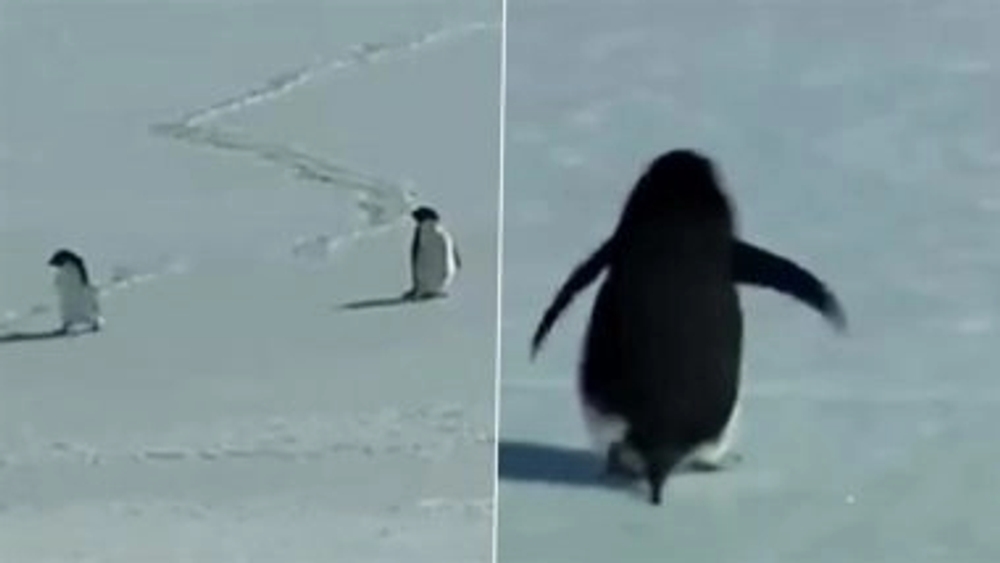
There is a single image from early 2026 that refuses to leave the collective mind: a lone penguin turning away from its colony and walking, steadily and without hesitation, toward a distant wall of Antarctic mountains. What began as a brief sequence in Werner Herzog’s 2007 documentary Encounters at the End of the World has exploded into one of the most resonant pieces of footage on the internet—layered with music, captions, and millions of silent projections.
The Scene
In Herzog’s film, penguin researcher Dr. David Ainley is asked whether penguins can experience something like insanity—not in the sense of believing themselves to be Napoleon, but in the sense of simply having had enough of their colony and choosing to leave.
His answer is careful:
“I’ve never seen a penguin bashing its head against a rock. They do get disoriented. They end up in places they shouldn’t be, a long way from the ocean.”
Shortly after, the camera captures exactly that. A group of penguins heads toward the open water to feed. But one breaks away. It does not follow the others to the ocean. It does not return to the colony. It turns inland and begins walking toward the mountains.
Herzog’s narration is calm, almost clinical:
“He would neither go towards the feeding grounds at the edge of the ice, nor return to the colony. Shortly afterwards, we saw him heading straight towards the mountains, some 70 kilometers away.”
He adds:
“Dr. Ainley explained that even if he caught him and brought him back to the colony, he would immediately head right back for the mountains.”
And then, the line that closes the scene:
“One of these disoriented, or deranged, penguins showed up at the New Harbor diving camp, already some 80 kilometers away from where it should be. The rules for the humans are: do not disturb or hold up the penguin. Stand still and let him go on his way. And here, he’s heading off into the interior of the vast continent. With 5,000 kilometers ahead of him, he’s heading towards certain death.”
What the Internet Added
Years later, creators on TikTok and Instagram began pairing this footage with a line that does not appear in the documentary—a kind of internet-born poetry layered onto the image:
“I have no wings, so I can’t fly. I’ll climb the highest mountains so I can still get close to the sky.”
That sentence is not Herzog’s. It emerged from the remix culture of short-form video. But placed over the footage of a flightless bird walking resolutely toward a wall of ice and rock, it fused with the original in a way that feels almost inevitable.
The result is a strange composite:
- On one layer, an ethologist’s dry observation about disorientation and certain death.
- On another, a human voice imagining the bird as a symbol of refusal—refusing to accept that the inability to fly means the inability to reach the sky.
Why This Image Holds
What makes the scene linger is not the mountain itself. It is the moment of divergence: the instant when the penguin stops moving with the group and establishes a direction that belongs only to itself.
Consider what the footage shows:
- The separation is not forced. No predator chases it away. No catastrophe expels it from the colony. The departure is initiated from within.
- The motion is calm. There is no panic, no hesitation—just a steady, unwavering walk in a direction that no other penguin is taking.
- The humans are bound by a rule that feels almost cruel: do not interfere, do not block, do not save. Stand still and let him go.
In that framing, the penguin becomes a mirror for a particular kind of modern experience: being surrounded by viable paths, socially approved directions, and yet feeling compelled to walk toward an unshared horizon that cannot be properly explained to anyone else.
Ambiguity: Broken or Brave?
From the vantage point of survival, the penguin’s behavior is plainly maladaptive. Food, warmth, reproduction—all of it lies in the opposite direction. The word “deranged,” as Herzog uses it, is not metaphorical. It is descriptive.
And yet the cultural reworking of the footage—that imagined monologue of a flightless creature insisting it will still pursue the sky—recasts the same movement as radical integrity. The penguin becomes an emblem of something else: an individual that refuses to obey a script simply because it has historically worked.
Both readings occupy the same frame. From outside, they are visually indistinguishable. The viewer cannot tell whether they are witnessing a breakdown or a breakthrough. The image becomes a question aimed back at the observer:
When someone walks away from a stable path toward an uncertain horizon, is that courage—or collapse?
Often, even the one walking does not fully know.
Did He Make It?
One question has quietly attached itself to the clip as it circulates through feeds and comment sections:
Did the penguin ever reach the mountains?
Empirically, the answer is almost certainly no. The distances, the cold, the absence of food—everything in that environment is stacked against survival. Herzog presents the walk not as a miracle, but as a tragedy.
And yet the persistence of the question reveals something. At a certain level, the outcome on the ice matters less than what the trajectory represents.
There is a way of answering yes that does not deny biology but shifts the definition of arrival:
- The moment the penguin turns away from both the feeding grounds and the colony, it exits the logic of optimization and enters the logic of meaning.
- The walk toward the mountains becomes significant not because of its probability of success, but because it is fully aligned—however incomprehensibly—with whatever internal orientation drives it forward.
- In that reframed sense, the crossing from conformity into commitment is itself a kind of arrival.
To refuse the walk—to feel the pull of the mountains and still force oneself back into the safety of the group—would avoid physical risk at the cost of a different kind of damage: the long, corrosive knowledge that the horizon was visible and ignored.
Regret, in that reading, is a slower and more persistent adversary than cold.
It was never only about physically touching the rock. It was about the walk itself. It was about the adrenaline of chasing something only he was aligned with, even if nobody else understood it. It was about refusing to betray that internal pull, even if it looked irrational from every external angle.
If he had turned back—if he had seen the mountains, felt that pull, and still forced himself to fall back in line—that regret would have been worse than the weather. The knowledge of I saw my mountain and walked away from it is the thing that kills slowly.
4So yes: he made it.
Maybe his body never touched the stone. Maybe he collapsed somewhere in the white, far from any witness. But in terms of what the walk represented, he crossed his finish line the second he chose the direction and did not turn back.
He made it—because it was never about arriving with proof. It was about not abandoning the one impossible, ridiculous thing that made him move at all.
And that is why a single disoriented penguin, walking into a lethal interior with nothing but conviction and silence, has become one of the strangest and most honest symbols the internet has produced: a reminder that the price of never risking a wrong direction may be living indefinitely in one that was never really yours.